Celtic Christian Spirituality: What It Is & Where to Find It

Celtic Christian Spirituality: What It Is and Where to Find It in Ireland
by Dr Phil Brennan PHD in Spirituality
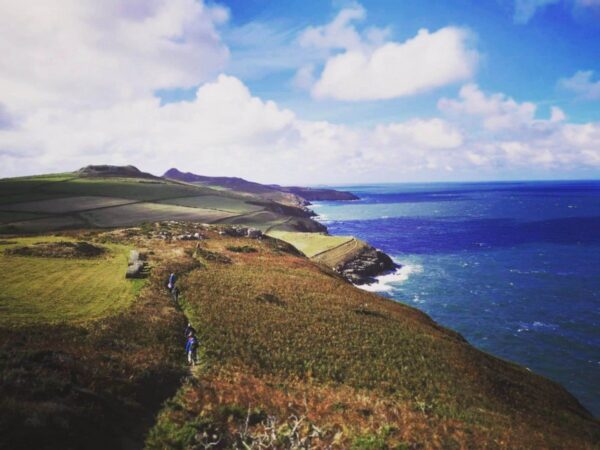
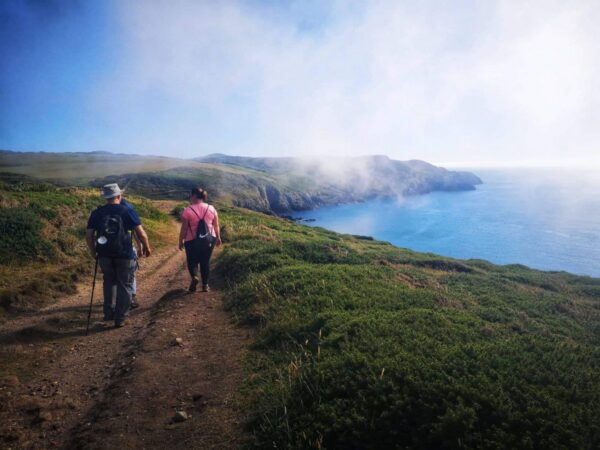
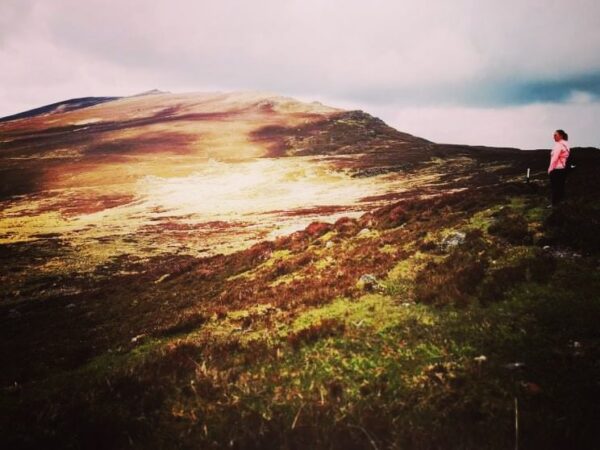
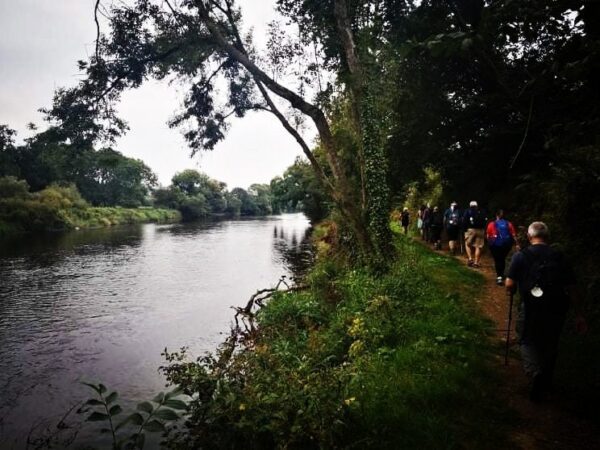
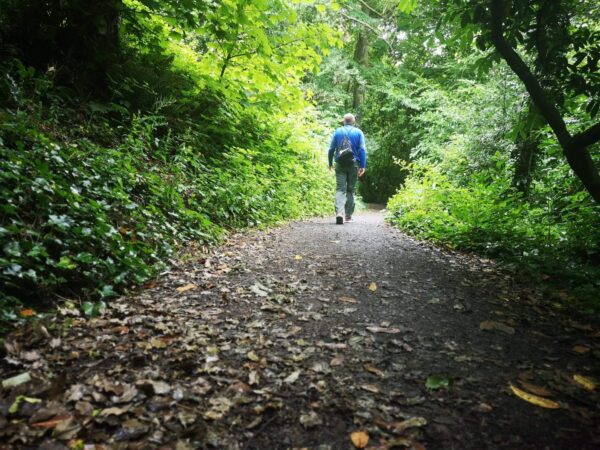
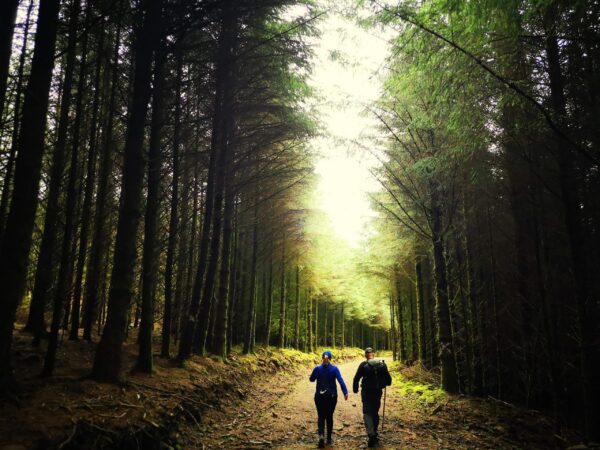
There are some questions that find us, almost unknowingly, as we make our way along the path. They surface on a mountain path at first light, or beside a holy well where the water still gathers wishes, or in the hush of an old abbey as the last of the day slips through a broken window. Ancient spaces draw us deeper into the unknown. What is it about this place? Why does it feel like coming home? It pays to pause a while by the river’s edge and soak in the wonder of it all. Echoes from afar reach within to remind us we are not alone.
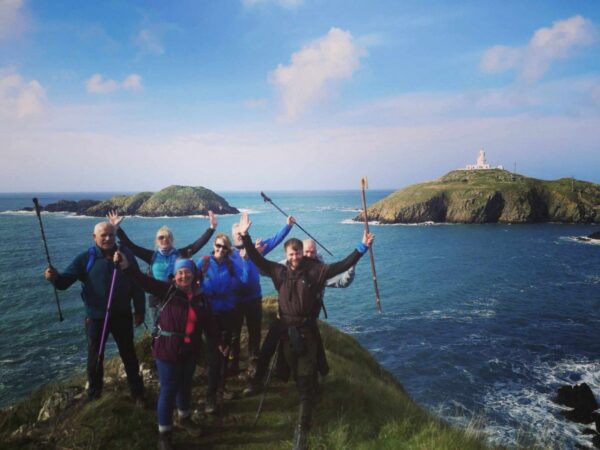
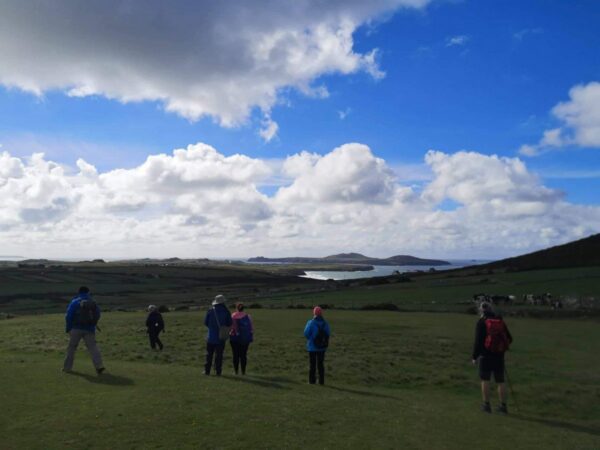
Over almost ten years of walking with pilgrims along St Declan's Way and beyond, I have heard the question asked in many accents and in many ways. More often than not, the answer lies in something we call Celtic Christian spirituality, a way of seeing the world that took root on this island some 1,500 years ago and has never quite left the land. You can still sense it in the stones. You can hear it in the old prayers. And if you slow down long enough, you can feel it beneath your feet. We soon discover the timeless draw of Celtic Ireland. What was, still is and will be to come. Therein lies the mystery of it all.
In this Letter from a Celtic Soul, I want to share what Celtic Christianity is, what its early followers believed, and where you can still find it in Ireland today.
What is Celtic Christianity?
Celtic Christianity is the name given to the early Christian faith as it was lived in Ireland, Scotland, Wales and the other Celtic lands from around the 5th to the 12th century. It was never a separate church. It was the same faith found across Europe, shaped by a people who loved the land, kept their stories and built their communities around monasteries rather than cities.
When Christianity arrived in Ireland, it did not sweep away all that came before. It met an island already alive with sacred wells, holy hills and seasonal festivals, and it found a home among them. Wells once honoured by the old ways were blessed anew in the names of saints. The great feast of Imbolc became the feast of St Brigid. The old and the new learned to sit side by side, and in many places they still do.
What emerged was a faith with its feet on the ground. It was monastic, poetic, deeply rooted in nature and close to the rhythms of daily life: the lighting of the fire each morning, the milking of the cow, the setting out on a journey. Prayer was not kept for Sundays. It was woven through the ordinary.

The heart of Celtic Christian spirituality
The early Irish left us no single creed of their own, but their prayers, poems and monastic ruins tell us a great deal about what they held dear. Five threads run through it all.
- The sacred in the ordinary. For the Celtic Christian, God was not far off. The divine was present in the hearth, the field, the tide and the stranger at the door. Every task could become a prayer.
- Creation as a book of God. Nature was seen as a second scripture, alongside the written word. The early monks wrote poems to the blackbird and the wind on the water. They saw the land itself as holy ground.
- Thin places. These are places where the veil between heaven and earth seems to grow thin, where the eternal feels close enough to touch. Skellig Michael, Glendalough and the cliff path at Ardmore are often spoken of in this way.
- Hospitality. To welcome a guest was to welcome Christ. The monasteries kept a guesthouse for travellers, and that spirit of welcome lives on with the sisters at Glencairn Abbey, who open their doors to our pilgrims each year.
- Pilgrimage. The Irish monks had a word for leaving home for the love of God: peregrinatio. Some set out on foot along paths like St Declan's Way. Others set off in small boats with no oars, trusting the sea to carry them where they were meant to be.
None of this asks us to leave the world behind. It asks us to see it differently, to attune to a new frequency, to go deeper into the story of the land and its people. It is then we see the landscape glow with a hue we may not have noticed before. Celtic spaces nudge us closer to the timeless in our midst. Listen, slow the pulse down, and soon you’ll hear it… the deeper song of the mystics drawing us back to a place we call home.

Is the Celtic cross a Christian symbol?
Yes. The Celtic cross is a Christian symbol: a cross with a ring around the point where the arms meet. The great stone high crosses of Ireland were carved by monastic communities from around the 8th century onward, and many are covered in scenes from scripture, from Adam and Eve to the Last Judgement. In an age when few could read, they were sermons in stone.
The ring itself has been given many meanings. Some see it as a halo, others as a symbol of eternity or of creation held in God's embrace. An old legend tells that St Patrick joined the cross to a circle long honoured by the people, bringing the old and the new together in one image. Whether or not the story is true, it says something real about how faith grew on this island.
Stand beneath the Cross of the Scriptures at Clonmacnoise, or the high crosses at Monasterboice, and you will understand why these stones have lasted so long. They were made to be read slowly.
The Celtic saints
The saints of early Ireland were not distant figures in stained glass. They were local people, rooted in a valley, a river or a stretch of coast, and their stories are still told in the places they knew.
- St Declan of Ardmore. Tradition holds that Declan was preaching in the land of the Déise before St Patrick arrived. The path we walk from the Rock of Cashel to Ardmore follows his journey home, and his holy well still stands on the cliff above the sea.
- St Patrick. Ireland's patron saint came first as a slave and returned as a missionary in the 5th century. Cashel, Croagh Patrick and countless holy wells carry his name.
- St Brigid of Kildare. Abbess, peacemaker and friend of the poor, Brigid founded her great monastery at Kildare around the year 480. Her feast on 1 February still marks the first stirrings of spring.
- St. Finbarr, Gougane Barra. The hallowed shrine of St Finbarr dates back to the 6th Century where he communed with God. The surrounding mountains were his cloister and the lake was for him the mirror of God’s grandeur, stone cells commemorate his hermitage.
- St Kevin of Glendalough. A hermit who went into the Wicklow mountains seeking solitude and found a community gathering around him. The valley of the two lakes remains one of the most peaceful places on the island.
- St Ciarán of Clonmacnoise. He founded his monastery on the banks of the Shannon in the 6th century. It grew into one of the great centres of learning in Europe.
- St Colmcille (Columba). Born in Donegal, he sailed to Iona in 563 and carried the Irish way of faith to Scotland and beyond.
A wave of spiritual energy passed over Ireland over a relatively short few centuries. What strikes me most, walking in their footsteps, is how human these stories are. These were people who struggled and doubted and set out anyway. They made their way, resolute, unswerving, fearless… and have left their footprints for us to follow. Now is our time to leave our own imprint in the land just as they would want us to.

Celtic monasticism: a lamp at the edge of Europe
Where much of Europe organised the Church around bishops and towns, Ireland organised it around monasteries. They were places of prayer, but they were also schools, libraries, workshops, farms and guesthouses. Some grew to the size of small cities.
While much of Europe was in turmoil after the fall of Rome, Irish monks copied and illuminated manuscripts with extraordinary care. The Book of Kells, now in Trinity College Dublin, is the most famous of them. Scholars travelled from across Europe to study at Clonmacnoise, Lismore and Glendalough, and Irish monks in turn carried learning out into the continent.
At the other end of the scale were the hermitages. On Skellig Michael, monks climbed hundreds of hand-cut steps to build beehive huts of dry stone on a rock in the open Atlantic. They did not go there for comfort. They went to be emptied, to stand at the very edge of the known world and seek the nearness of God.
The round towers that still rise above these sites, at Glendalough, Clonmacnoise, Ardmore and the Rock of Cashel, were bell towers and places of safekeeping. To me they have always looked like fingers of faith pointing to the sky.

Where to experience Celtic Christian spirituality in Ireland today
You can read about Celtic spirituality in books, and many fine ones have been written. But it was never meant to be only read. It was meant to be walked, sung and shared at the table.
Some of the places where it still breathes:
- St Declan's Way, from the Rock of Cashel to Ardmore: a pilgrim path that predates the Camino de Santiago by some 400 years.
- Glendalough, Co. Wicklow: St Kevin's valley of two lakes, best visited early, before the crowds.
- Clonmacnoise, Co. Offaly: St Ciarán's monastic city on the Shannon, ideally arrived at by water as the pilgrims once did.
- Skellig Michael, Co. Kerry: the island of the monks, if the sea allows.
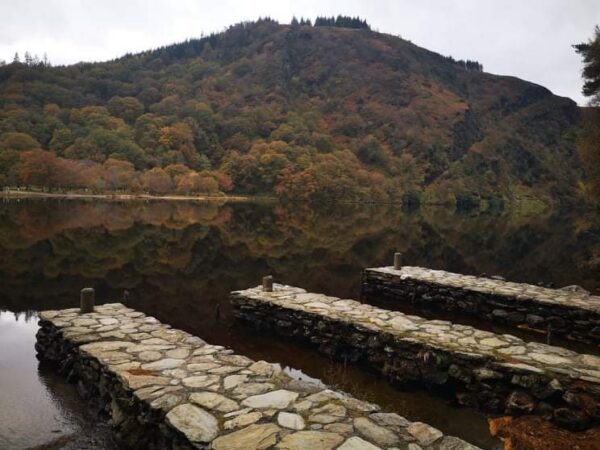
- Gougane Barra, Co. Cork: where St Finbarr built his community by the lake.
- Kildare: St Brigid's town and her holy well.
- Glencairn Abbey, Co. Waterford: home to a community of Cistercian sisters, where the rhythm of monastic prayer continues today.
Our 12-day Celtic Pilgrim Experience brings many of these threads together: Glendalough, the Book of Kells, five days walking St Declan's Way and evenings with the sisters at Glencairn Abbey. It runs in partnership with the Missionaries of the Sacred Heart, and 10% of every booking supports their work around the world. If you would rather shape a journey of your own, we can build a private pilgrimage around you.
Whatever brings you here, whether faith, curiosity or simply a longing for something deeper, you will be welcome. People come to us from every faith and none. What we share is a love of the land and the stories it holds.
You can reach out to Elaine and me directly at info@celticwaysireland.com. We would love to hear what draws you to Ireland.
Frequently asked questions
What did Celtic Christians believe?
They shared the core beliefs of Christians everywhere, but they held them with a strong sense of God's presence in nature, in daily work and in the stranger at the door. Hospitality, pilgrimage, learning and a love of creation were at the heart of their faith.
How is Celtic Christianity different from Roman Catholicism?
It was not a different church. The early Irish were part of the wider Western Church. The differences were in practice: Ireland was organised around monasteries rather than dioceses, and for a time it kept its own way of calculating the date of Easter, a question largely settled at the Synod of Whitby in 664.
What is a thin place?
A thin place is somewhere the boundary between heaven and earth feels thin, where people sense the sacred close at hand. Glendalough, Skellig Michael and Ardmore are often described this way.
Do I need to be religious to explore Celtic spirituality?
Not at all. Many of those who walk with us are not religious. They come for the landscape, the history, the music and the space to reflect. Everyone is welcome, wherever they are on their own path.
Where is the best place to experience Celtic Christianity in Ireland?
Glendalough, Clonmacnoise, Skellig Michael and the Rock of Cashel are among the most powerful sites. For a deeper experience, walking a pilgrim path such as St Declan's Way lets you meet these places slowly, as the early pilgrims did.